Hospice supports children with bereavement workshop sessions
Share this article
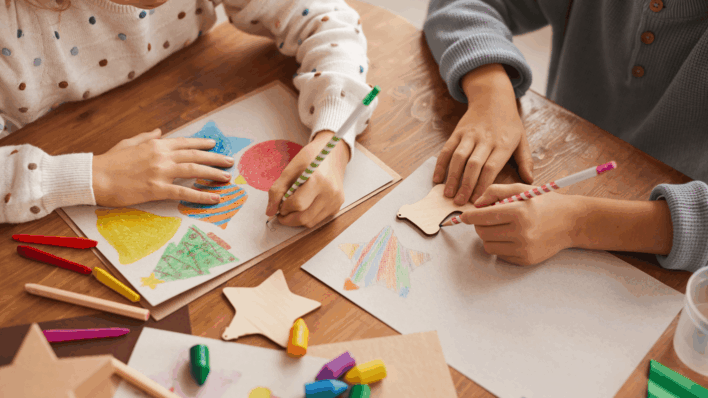
Arthur Rank Hospice Charity have delivered a series of workshops to support children and young people who have experienced a bereavement.
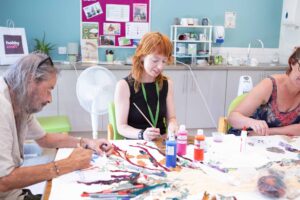
The first ‘Sharing what it’s like’ workshops, held as a pilot in 2025, were led by Art and Music Therapists. Following a successful bid we were delighted to receive grant funding which enabled us to continue the project. They were then held in April 2026, led by Art Therapist and Life Celebration Coordinator, Sophie Wakefield at the Charity. The sessions, which have evolved to include animation, offered a safe and creative space for young people, to share their feelings following a bereavement. The aim was to support those, aged 8-16 years, with similar experiences, to connect with one another, express their feelings and have fun.
Starting in January 2027, we will be hosting three more sessions for young people – no prior connection to the Charity is necessary. We are delighted to team with Animator, Jenny Wright to support the children and young people to make a short animated film together that explores storytelling with our experiences. We asked Sophie more about the workshops and she kindly shared:
What are some of the challenges children can have after the death of a loved one?
“The challenges children and young people face are unique; there’s no one size fits all for grief. However, in the wake of a loss they are adjusting to a new reality without the presence of their loved one which can impact in many different ways. They might experience deep and challenging emotions in response to the loss, struggle to communicate to those around them, take responsibility for the loss or have their routines and roles change within the family. Supporting children and young people to have safe, consistent and validating relationships as they come to terms with the death is important.
Why is it important for children to have opportunities to talk about grief and connect with others who have been in a similar situation?
It can be really isolating for children to feel like they are the only person they know that’s lost a parent or loved one. But in reality, around 46,300 dependent children aged 0–17 in the UK lose a parent each year (that’s about 127 every day) and many more will lose other significant people in their lives, including siblings, Grandparents, Aunts and Uncles etc. Creating spaces for children and young people to share their experiences can help de-stigmatise loss and support them in knowing they’re not alone as they go through the process of grieving.”
What have you learnt from working with bereaved children and families?
“I’ve learnt that grief is organic; although it can be a painful experience, it’s a natural process that we all go through at different points in our lives. Making space for our feelings rather than telling ourselves it should happen in a particular way or take a certain amount of time can help us; we grow around grief rather than ‘get over it’. I’ve worked with lots of children who’ve shown a real sense of resilience and appreciation for themselves and their loved one through the grieving process.”
What can the young people expect when they come to the Sharing what it’s like sessions?
“They can expect to meet other children and young people who’ve had similar experiences, be given the opportunity to share if they feel comfortable (but also no expectation, just being there is enough!), learn new creative skills and have fun together.”
Is there a particular activity or moment from the pilot sessions that stands out to you or is there anything that you’re particularly looking forward to about the January sessions?
“I’m looking forward to seeing what the group creates; we have a really exciting collaboration with animator Jenny Wright where the children will have the chance to share their stories through making a film together. I think the process will be fun, exploratory and hopefully we’ll end up with something that feels truthful to the children’s experiences that opens up a conversation about grief.”
Family packs and the Worry Bears are shared at the sessions. Sophie continued:
How did the idea for the family packs started?
“The idea for the family packs started as we were aware that patients on the Inpatient Unit often have younger loved ones who would be visiting them there – and we would often get requests from families for advice on how to support these children or teenagers as they anticipate a bereavement or deal with a loved one being unwell. We decided to make something that families could engage with together, at their own time and pace, that supported them to think about ways of connecting with each other, expressing their feelings and perhaps reflecting on some special memories.”
What do they contain and who are they meant for?
“They can be used by patients and the children and young people in their lives, together in a self guided way. Each pack contains a booklet guide of activities focused on life celebration, creativity and wellbeing. Alongside the guide, we have a worry bear, art materials, stickers and a sensory fidget toy.”
What role do creative activities play in helping children process grief and remembering someone who has died?
“Creative activities are useful in that they don’t require verbal language or a conscious grasping of an event in order to help process something. Using play and art, we are able to express deep feelings and experiences without necessarily needing to have the ability to explain them first. So this makes creative activities particularly helpful for children as a safe way to express grief at a time when they are still growing and learning about the circumstances they find themselves in. Creative objects are also a physical, tangible way of remembering people – an object can remain as a keepsake that a child can return to, even after someone has died. This can provide continuity and the sense of an ongoing bond.”
What’s the purpose of the worry bears and how do children typically use them?
“Worry bears can be used as a way of keeping connected to a loved one, providing comfort and giving children someone to talk to without the worry of how their words might impact others. They can be especially helpful in supporting children with transitions (e.g. when they are visiting a hospital or the Hospice) as they are something that can stay continuously by their side which can be reassuring in times of uncertainty and change.”
Have you received any feedback about the sessions, the family packs or the worry bears?
“We have received lots of positive feedback from previous sessions, including a parent who said, “My son loved it. Afterwards he kept saying what a wonderful morning he had had and how lovely it was to talk to other children who had experienced loss.” We have also received really positive feedback from the packs which have met an important need and we hope to be able to provide them to lots more families in the future!”
The next ‘Sharing what it’s like’ sessions will run on Saturdays from 10am-4pm on 16 and 30 January and 6 February 2027. It is recommended that the young person attends all three sessions.
For more information or to register your interest please email pfs@arhc.org.uk or telephone 01223 675770.
Further support for children following a bereavement can be found in the FAQ’s on our website.
Related articles
-

Grief Connections at Arthur Rank Hospice
Bereavement support open for all at the Hospice
-
Comfort and Light at Hospice’s ‘Light up a Life’ Celebrations
Light up a Life brought the community together to remember loved ones
-
Bistro Buddies … ‘Something to look forward to’
‘Bistro Buddies’ share how their strong and supportive friendships bloomed from a ‘very sad situation’
-
COVID-19: overview clinical services
Summary of clinical services, which will continue with current models