Clinical Hospice Colleagues train as Non-Medical Prescribers
Share this story
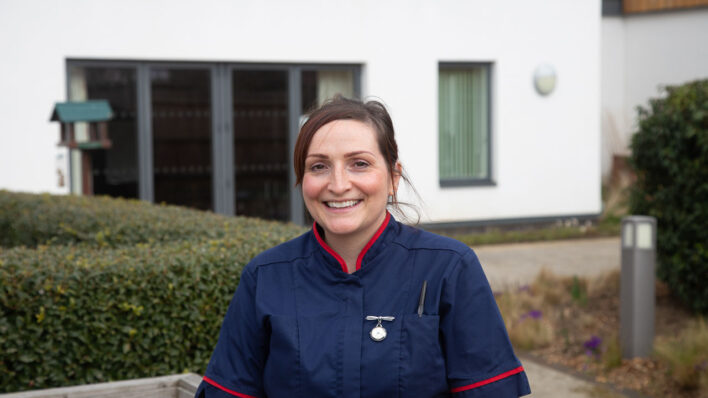
As experts in our field, we are passionate to keep our workforce up to date and give them opportunities to keep learning and sharing good practice in palliative and end-of-life care.
Clinical colleagues at Arthur Rank Hospice Charity have been trained to prescribe medication to patients in their care. This has important benefits to patients and their loved ones.
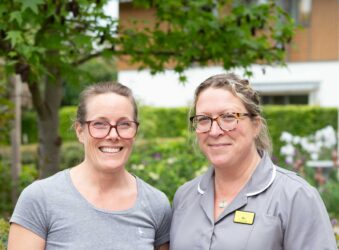
Louise Barbour, Clinical Nurse Specialist NMP for the Specialist Palliative Care Home Team and Vicky Williams, Clinical Nurse Specialist for the Palliative Care Hub shared their recent experience of training and qualifying as a Non-Medical Prescriber. Louise, who has worked for the Charity for 21 years, explains more:
“I chose to train as a Non-Medical Prescriber (NMP) to develop my clinical knowledge and enhance the care I was providing within my existing specialist palliative care nursing role, in the Specialist Palliative Care Home Team (SPCHT). It’s something I had wanted to do for some time and felt like the next natural step in my progression, but most importantly I could see that it would make a difference to patients and their families.”
The Training
“The training was intense. I had to complete a three month Advanced Clinical Assessment Skills module at Master’s level before I could even start the prescribing course, from which I learned a huge amount.
The Non-Medical Prescribing (NMP) course, runs over around six to seven months, then I needed to develop the knowledge, skills and clinical judgement needed to safely assess patients and prescribe appropriate medication within my scope of practice. This covered clinical assessment, pharmacology (pharmacokinetics and pharmacodynamics), legal and ethical aspects of prescribing, evidence-based practice, risk management and shared decision-making.
Alongside the academic work, I completed supervised clinical practice, with competency documentation and assessments. There were also examinations around calculations and maths and pharmacology, followed by a final written essay. It was certainly challenging, but also incredibly rewarding and has given me a much greater understanding and confidence in my clinical practice.”
Challenges of the course
“It was one of the hardest courses I have completed in my career. It’s a course that you undertake alongside your usual job, and with caring responsibilities at home, I’m honestly not quite sure how I made it through!
One thing I would say to anyone considering the course is that, without doubt, it has been one of the most interesting courses I have completed. It has hugely enhanced my role and the care I am able to provide to patients. However, it is a lot of work, and during those 6–7 months, pretty much every spare minute of free time needs to be dedicated to the course.
I think you just have to get your head in the right place, be prepared to be really focused, and accept that for those few months, the course will take up a big part of your life. It’s challenging but ultimately incredibly worthwhile.”
Benefits to the patients
“The prescribing qualification enables me to assess patients more holistically, make timely clinical decisions and manage symptoms more effectively, particularly in complex and rapidly changing situations.
Historically, I would have had to refer prescribing decisions back to GPs, which could sometimes result in delays in managing symptoms. Where medication charts in patients’ homes needed amending, family members would often have to take the charts back and forth to the GP practice, reducing the time they were able to spend with their loved one.
Ultimately, the qualification has given me greater autonomy in my practice and helped to reduce delays in accessing appropriate medication which leads to better symptom management and quality of life for patients. It also aids other external health care professionals particularly where there is a time sensitive need, as it reduces that pressure on an already stretched NHS.”
Louise concluded:
“I’m incredibly grateful to have been given the opportunity and funding to undertake this course. My career in palliative care began when I was in my early 20s, and I still can’t quite believe I’m here all these years later. What hasn’t changed is how passionately I still feel about my role, palliative care and the work we do as a Charity.
I’m proud to have been given the opportunity to develop my skills further and I hope that the investment made in me will continue to benefit our patients and their families throughout the rest of my career.”
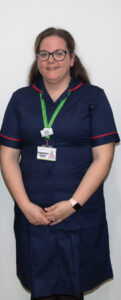
Vicky joined the Charity in 2022. She continues with her experiences and thoughts about the NMP training and qualification:
“Working within the Palliative Care Hub, including during out-of-hours periods, has shown me how delays in accessing an out-of-hours GP or healthcare professional can significantly affect patients, their families and colleagues working in the community.
In palliative care, timely decision-making and prompt symptom management are essential, particularly when patients may be approaching the end of life or experiencing distressing symptoms.”
Supporting patients and colleagues
“By training as a prescriber, I felt I could make a more direct and meaningful contribution to patient care by helping to reduce delays, improve responsiveness, and support safe, timely access to appropriate medication. It also enables me to provide additional support to colleagues, offering clinical guidance and practical prescribing input when it is needed most.”
Training
“To become an Independent Nurse Prescriber, I first completed a three-month course in advanced clinical assessment skills. This provided a strong foundation in assessment, clinical reasoning, decision-making and safe escalation. I then went on to complete the Advanced Non-Medical Prescribing qualification (V300) over a six-month period, while continuing in my clinical role.
The programme required a significant amount of self-directed study, supervised practice, portfolio work and formal assessment.
The hardest part of the training was balancing the demands of the course alongside a busy clinical role. The qualification required protected time for study, clinical supervision, assessments and portfolio development, while also maintaining day-to-day responsibilities within the Palliative Care Hub.
It was challenging to build confidence in applying the theory to practice, particularly when considering the responsibility that comes with prescribing safely and appropriately remotely.
However, the experience was also very positive, as it strengthened my clinical judgement, encouraged deeper reflection and helped me develop greater confidence in my assessment and decision-making skills.”
Placements
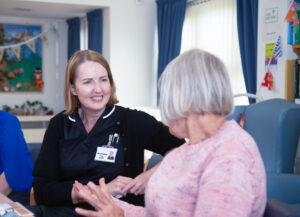
“To ensure I had access to the right learning opportunities and sufficient face-to-face clinical assessment experience, as my role is remote telephone assessments, I spent time with Advanced Specialist Paramedic from EEAST, ANPs at a GP surgery in Wisbech, the Medical team at the Inpatient Unit, Non-Independent Nurse Prescriber at the Palliative Care Hub with Caroline Gale and with Michelle Knight (Matron in Palliative Care) and Emma Warner (Palliative CNS at the Alan Hudson Centre) who were my practice assessor and supervisor.
These placements helped broaden my assessment skills and gave me valuable exposure to different clinical environments, approaches to decision-making and prescribing considerations. I’m very grateful for the support.”
Vicky concluded:
“I am very newly qualified and still building upon my experience and confidence but the qualification makes a significant difference to my professional role and to the care I can provide for patients. It has enabled me to respond more proactively to patients’ symptoms, particularly where timely prescribing can prevent unnecessary distress, delays or escalation.
In palliative care, being able to assess, advise and prescribe within my scope of practice supports more responsive decision-making and can help patients remain in their preferred place of care where appropriate.
It has also strengthened my contribution to the wider multidisciplinary team, as I can provide prescribing input, support colleagues with symptom management planning and help improve continuity of care for patients and families.”
If you would like to work for Arthur Rank Hospice Charity, please visit arhc.org.uk/joinus
View other stories
-

Sarah Fay, Complementary Therapist
Sarah- Fay shares more about her role at the Alan Hudson Centre
-
Nicky Newton, Complementary Therapist
Nicky shares more about her role
-
Thank you, Wisbech! Star Shine Night Walk raises over £13,000
Supporters of Star Whine Night Walk 2026 in Wisbech raise over £13,000 to support people in Cambridgeshire
-
Distinctions for qualified Nursing Associates at the Inpatient Unit
Beth Bryant and Mel Turner-Page share their experience of the becoming Nursing Associates