Talking about difficult conversations during Dying Matters Week
Share this story
Dying Matters Week (4-7 May 2026), aims to break down the stigma and taboo of talking about death and dying, so it is not something to be feared. They cite that 27% of people find it hard to talk about death with family or friends and 30% bottle their feelings up.
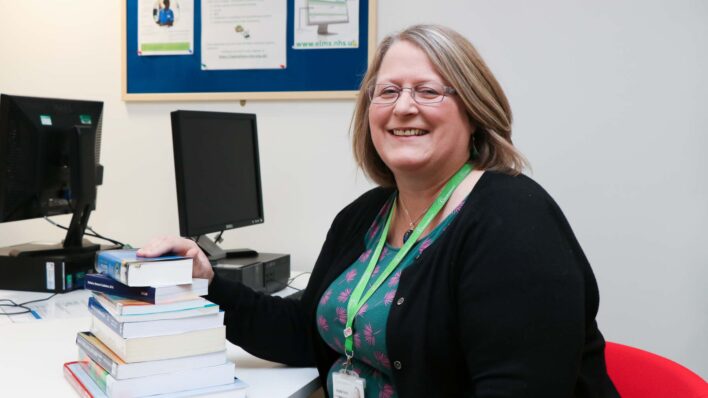
Head of Education and Practice Development, Kay Hardwick at Arthur Rank Hospice, teaches professionals about how to have difficult conversations with patients and their loved ones. She shared:
“Conversations about death can start naturally at a very early age. When a pet dies if often offers the first opportunity to introduce this. It is important to use the correct words, such as death, dying and died rather than lost or gone to sleep, which may be confusing.
If death and dying becomes something family members feel comfortable to talk about, people’s views and wishes, about how they want to be cared for celebrated or remembered can be discussed over a period of time. If we don’t talk about death and dying and bereavement before someone close to us dies, it can be harder to cope when we experience it.”
Kay added:
“Our clinical teams at the Hospice, at the Alan Hudson Centre and in the Community supports patients who are living with an advanced serious illness or other life-limiting condition and those who need end of life care, who are often in situations when difficult conversations are necessary. If patients or loved ones get upset we will sit with them, validate their feelings and allow them to express their true feelings.
It may be a sad time however patients often feel empowered when they are given the opportunity to talk about their future wishes. Being there and listening to them is most important.”
The NHS website shares advice about starting conversations about dying. These might include:
• feelings about death
• worries
• fears
• your wishes for your future care
• your funeral
• things you would like to give to people
Kay continued:
“The ReSPECT document can help with this and our clinical staff are sometimes the ones to introduce it to patients and their families. This is a signed record of a personalised conversation between a patient and a clinician about their future health and care needs. It is important because when a patient may not be able to speak their wishes, the written document can be referred to and their wishes will be clear for others to take into consideration.”
More information about the ReSPECT document can be found on our website.
You can read more tips about talking about dying from Hospice UK.

Local Celebrant, Olivia Burren who visits the Living Well Service to share her experiences said:
“Some people like to have the opportunity to be in control of their wishes when they are dying. It is helpful to the families if the person [who has died] has left instructions for their wishes after their death. This often helps loved ones organise things at a time when they may be in shock or grief and they are not left wondering if they did the right thing.”
She shared a ‘Funeral Plan’ where people can complete different sections of their choice, for the funeral service, which include:
• Music to be played– specify the artist as well as the track and why you chose it
• Poetry or readings
• Some things about me: family, early life, school, job, hobbies, interests.
• Who has been important in your life
• Things you love(d)
• Things you dislike(d)
• A favourite place and time
• My proudest achievement
• The legacy I hope I have passed on
• I’d like you to remember me as ….
• My hope for the future after I’ve gone
• Anything else e.g. People to wear a specific colour or dress code, I’d like a motorbike hearse, dove release etc.
Some of these questions and more, can be found on our 51 questions on our website for you to view or download. A fun way of gathering information is to write the questions individually on a piece of paper and pop it in a jam jar. You can then take turns pulling out a question when you can both answer it. You can then jot down the answers or voice record each other talking about it, so you have a record for later. Smart phones are good for this.
Olivia also mentioned The Good Funeral Guide for a place to get information. The Charity has a ‘Ducks in a row’ booklet, which was produced by the Hospice, to guide people through the process of recording their affairs, allowing them to collect information about their life in one place. ‘Your final wishes’ section on pages 28-30, include very specific instructions for loved ones after the person has died.
It is important that someone knows where the important documents such as the ReSPECT document, Wills, Ducks in the Row booklet etc. are kept, so they can be easily found and referred to when someone becomes unwell or dies.
View other stories
-

Sarah Fay, Complementary Therapist
Sarah- Fay shares more about her role at the Alan Hudson Centre
-
Nicky Newton, Complementary Therapist
Nicky shares more about her role
-
Thank you, Wisbech! Star Shine Night Walk raises over £13,000
Supporters of Star Whine Night Walk 2026 in Wisbech raise over £13,000 to support people in Cambridgeshire
-
Distinctions for qualified Nursing Associates at the Inpatient Unit
Beth Bryant and Mel Turner-Page share their experience of the becoming Nursing Associates