
Empowering Social Care Practitioners: Enhancing Competencies in Death, Dying and Bereavement Care
From Idea to Impact: Transforming End of Life Care Conversations
What started as a single spark of insight from Alex Giasemidis, a palliative care social work practitioner based at Arthur Rank Hospice Charity (ARHC) has grown into a recognised initiative reshaping how we support unpaid carers in palliative and end of life care. Alex identified a key training gap that meaningful conversations between social workers and social care practitioners and unpaid carers were often missing from palliative and end-of-life care pathways. Carly Wills, Matron at ARHC, joined the project, bringing clinical leadership, on the ground insight that helped shape the direction and delivery of the project.
With timely support from the Accelerating Reform Fund and strong backing from Cambridgeshire County Council and Sharon Allen, CEO OBE from ARHC, the idea was transformed into a dynamic training programme.
From inception, the vision was clear to create a scalable, high impact e-learning content that could reach practitioners beyond our immediate networks.
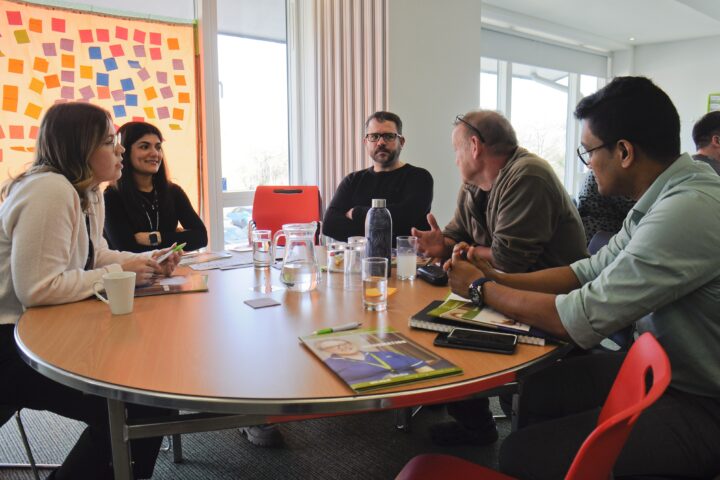
We delivered five in-person training sessions, attracting a diverse range of attendees including representatives from Adult Social Care, VCSE colleagues, the Integrated Care Board, Anglia Ruskin University, clinicians, occupational therapists, members of the Carers’ Partnership Board, and local councillors. The response was overwhelmingly positive.
The training has been widely praised for creating a space where practitioners can pause, reflect, and reconnect with the core principles of end-of-life care. Participants valued the opportunity to engage with real stories and case studies, which provided a meaningful refresher on best practice and practical approaches. As Fran Marshall, Principal Social Worker for Cambridgeshire, noted: “It’s great that our practitioners have had the opportunity to come and reflect on that experience and hear some stories and case studies, and a real refresher on how we can take forward some of those changes in practice. I think the training has a real opportunity to be scaled up and rolled out nationally so we can support our practitioners to have conversations with people to support [who they care for] towards the end of their life, so that they can have a dignified death.” This endorsement highlights both the immediate impact of the programme and its potential to influence practice on a national scale.
Thanks to our ongoing partnership between the local authority and ARHC, over 140 professionals have already engaged with the programme. The Social Care Institute for Excellence has since produced a case study showcasing the project as an example of best practice within the field of palliative and end-of-life care.
Now, the training has evolved into a flexible modular e-learning package featuring real-life case studies and a powerful podcast series to broaden access and drive lasting impact.
But the benefits extend beyond practitioner development. Brokerage teams are now engaging in more purposeful dialogue with care providers about placement requests, ensuring clarity and consistency in terminology when distinguishing between nursing and residential care for people at the end of life. Recognising the difference between being cared for in bed rather than nursed in bed enables more appropriate discharge planning into residential settings where care is responsive to individual needs, rather than defaulting to higher-cost nursing placements. This approach not only promotes dignity and person-centred care but also avoids over-prescription of services, delivering measurable cost efficiencies and demonstrating the programme’s practical, real-world value.
Interested in learning more? Contact Talkcare@arhc.org.uk